


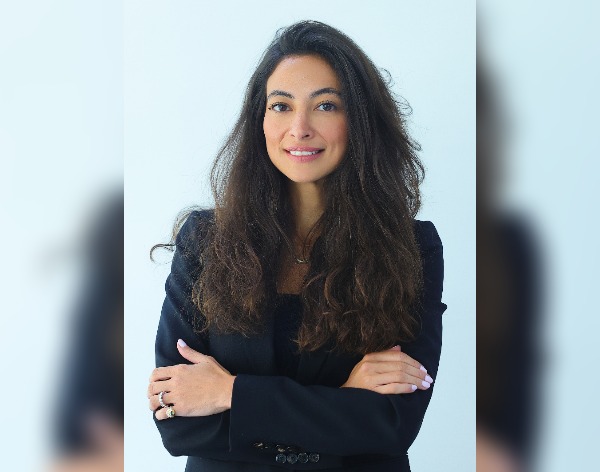
Ghada Ghotmeh, Chief Investment Officer at CREI, explains how CREI Capital is reshaping how infrastructure is financed across African countries and other emerging markets
27 April 2026
Across African nations and other emerging markets, the gap between connectivity demand and infrastructure deployment remains vast.
While over 400 million people are now online in the continent, penetration still lags below 30% of the population, and the transition to 4G and 5G continues to strain already fragile infrastructure systems.
The challenge is far from just technological, but also financial.
“Emerging markets don’t lack demand, they lack bankable structures,” says Ghada Ghotmeh, at CREI Capital. “The real constraint is how capital is deployed, priced and protected in high-risk environments.”
Redesigning capital for frontier markets
At CREI, Ghotmeh leads the design of capital architectures that enable infrastructure investments to scale in markets often overlooked by traditional investors.
Her approach goes beyond raising and deploying capital, focusing on restructuring how infrastructure is financed to transform high-risk, capex-heavy projects into predictable, scalable investment platforms.
“I design capital structures that convert complexity into bankability,” Ghotmeh explains. “That means aligning risk, returns and operational realities in a way that allows institutional capital to enter markets it would otherwise avoid.”
This philosophy underpins CREI’s energy service company (ESCO) model, a financing and deployment structure that shifts the burden of upfront investment away from telecom operators while improving efficiency and sustainability.
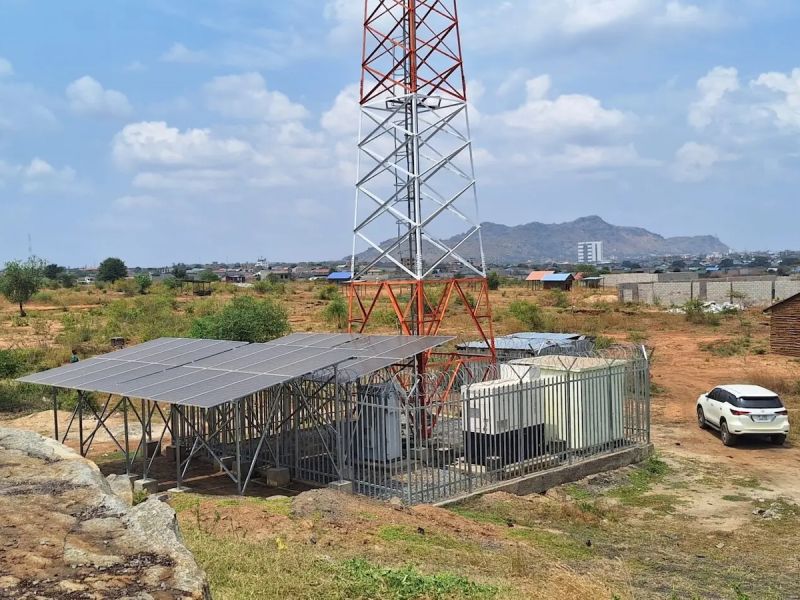
Under this model, CREI finances, designs and deploys energy solutions – primarily solar and hybrid systems – and is paid over a predetermined period of 10 to 15 years. The result is a transition from large upfront capital expenditure to stable operating-cost-based payments.
“For operators, this unlocks capital and accelerates rollout,” Ghotmeh says. “For investors, it creates predictable cash flows in markets that were previously considered too volatile.”
Making infrastructure bankable at scale
A defining feature of Ghotmeh’s role is her ability to bridge the gap between development finance institutions and on-the-ground execution.
CREI has secured capital from institutions such as the Facility for Energy Inclusion, Norfund and FinnFund, structuring investments that meet stringent risk, impact and return criteria.
But what differentiates the model is its replicability.
“We are not structuring one-off transactions,” Ghotmeh notes. “We are building platforms that can be deployed across multiple markets with consistent risk frameworks and scalable economics.”
This approach has already been demonstrated in practice. In the Philippines, CREI developed a telecom infrastructure platform by mobilising capital from leading development finance and institutional investors, including the International Finance Corporation, DEG, BlueOrchard and BluePeak Private Capital.
The platform enabled the expansion of infrastructure and improved network coverage in underserved areas, before being successfully scaled and acquired by Frontier Tower Associates Philippines, backed by leading global investment firm KKR.
“This is a clear illustration of how we create value,” Ghotmeh says. “We originate and structure platforms in complex markets, attract the right pools of capital, and scale them into investable assets for global investors.”
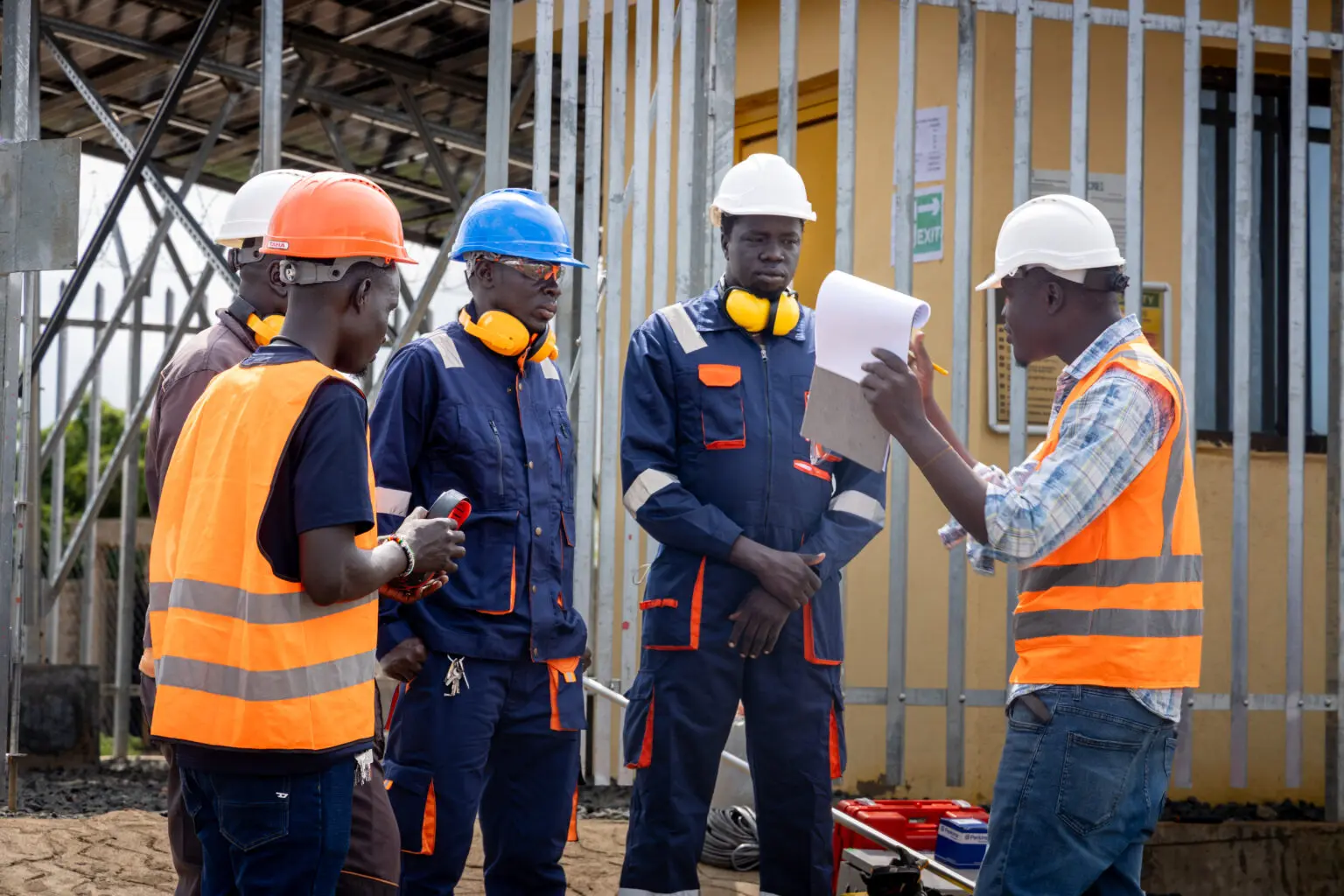
CREI’s current portfolio spans thousands of telecom sites across challenging geographies including South Sudan, the Central African Republic and Mali, countries where infrastructure deployment requires both financial innovation and operational resilience.
“These are environments where you cannot separate capital strategy from execution,” she says. “You need both to succeed.”
Where energy, connectivity and capital converge
At the heart of CREI’s strategy is the integration of energy and telecom infrastructure, which is becoming increasingly critical as networks expand and energy demands rise.
The shift to 4G and 5G, in particular, is accelerating the need for reliable, cost-efficient power solutions.
“Energy is no longer a support function for telecom companies, it is a core part of the investment thesis,” Ghotmeh explains. “If you cannot solve energy efficiently, you cannot scale connectivity.”
By replacing diesel-based with renewable energy systems, CREI’s model delivers measurable economic, environmental and social impact, reducing operating costs, cutting carbon emissions and enabling the expansion of telecom infrastructure to bring connectivity to underserved populations.
This holistic model is key to attracting long-term capital.
“Investors today are looking for assets that combine resilience, scalability, sustainability and impact,” says Ghotmeh. “That intersection is where we operate.”
From projects to platforms
Looking ahead, Ghotmeh is focused on expanding CREI’s model beyond energy into a broader infrastructure ecosystem.
The next phase includes selective expansion in developing countries, alongside investments across the broader digital infrastructure ecosystem that is rapidly converging with telecoms and energy.
“Our strategy is to build an integrated infrastructure platform where power, connectivity and data are treated as a single investment ecosystem,” says Ghotmeh.
This evolution reflects a broader shift in how infrastructure is financed and operated globally.
“The future is not about isolated assets, but about interconnected platforms that can scale efficiently across countries,” she adds.
New investment frontiers
For Ghotmeh, the opportunity lies precisely in markets that others perceive as too complex.
“Our advantage is our ability to price risk accurately and structure investments accordingly,” she says. “That is what allows us to operate where the infrastructure gap and, therefore, the value creation is greatest.”
With a model that combines financial innovation, operational depth and long-term partnerships, CREI is positioning itself at the forefront of a new era in infrastructure investment – one where capital is not just deployed, but intelligently designed.


%201.svg)